

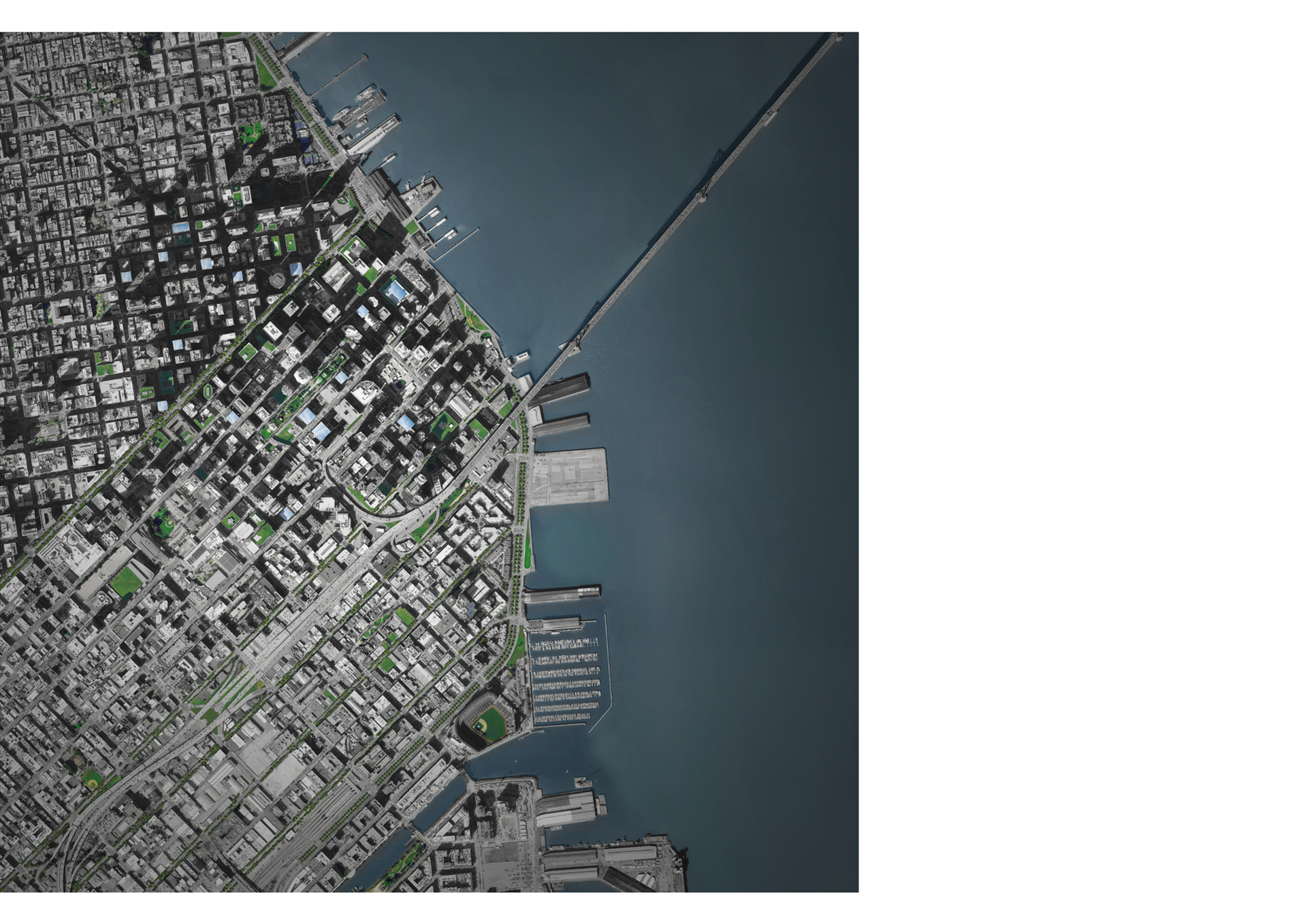
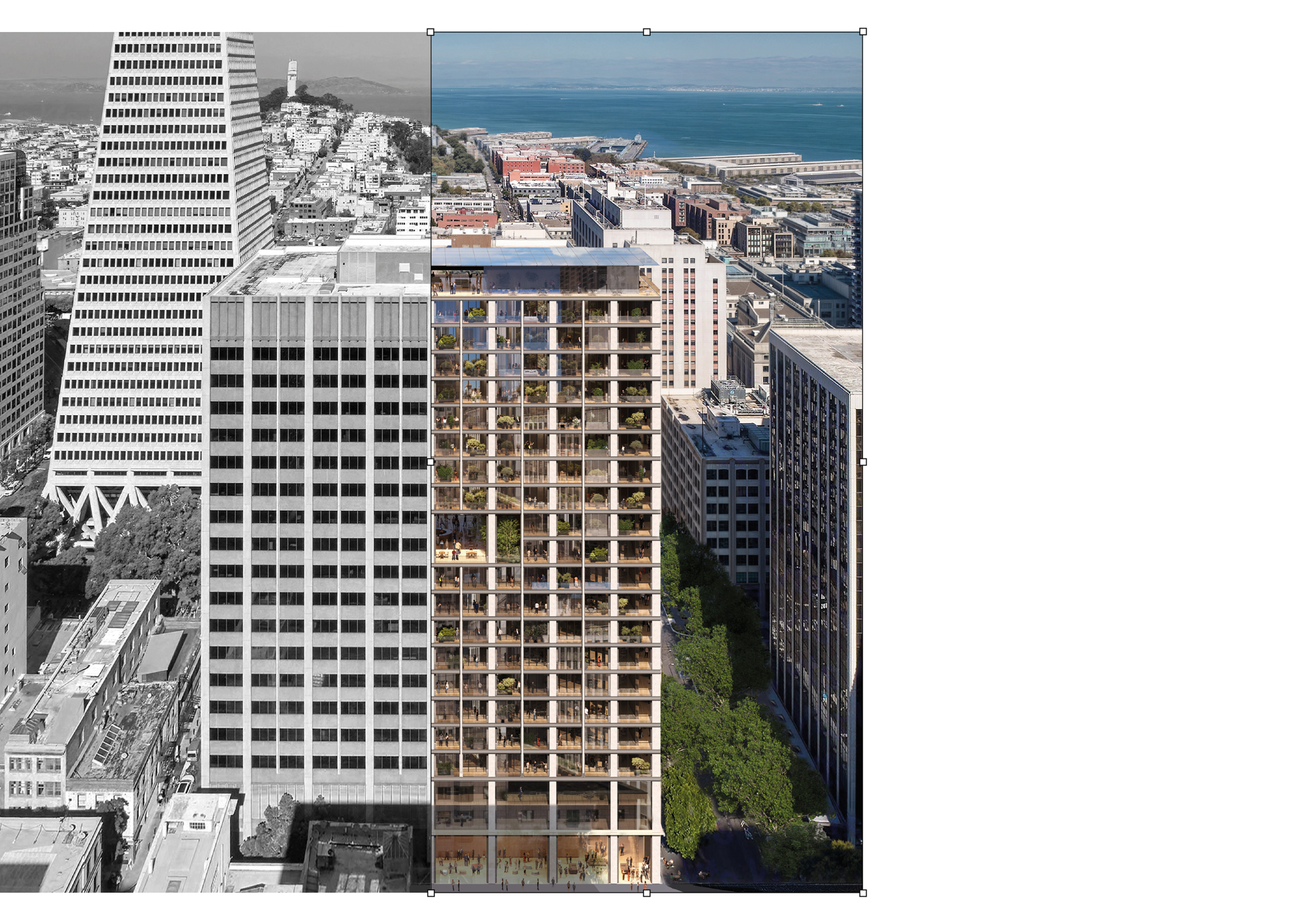
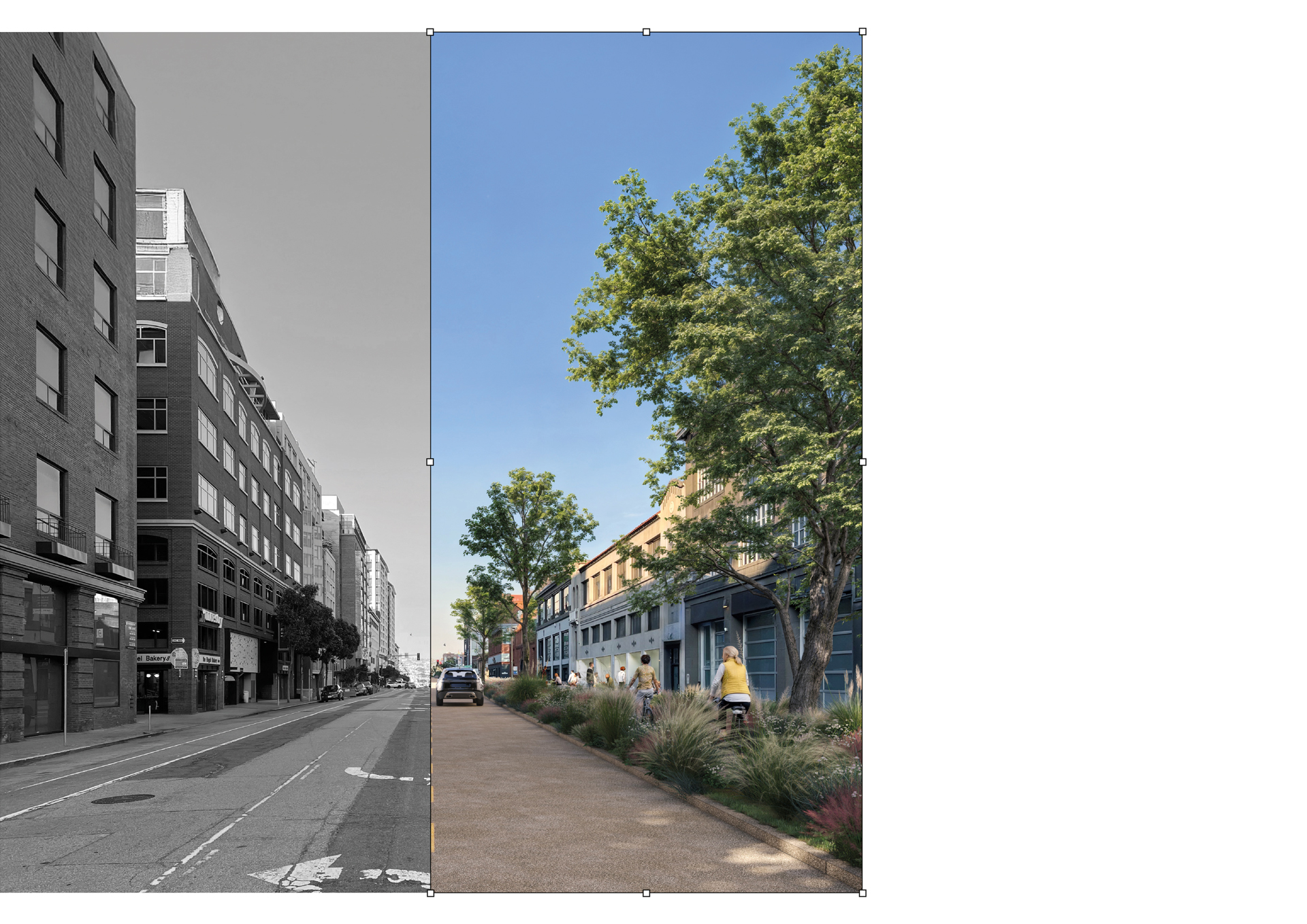
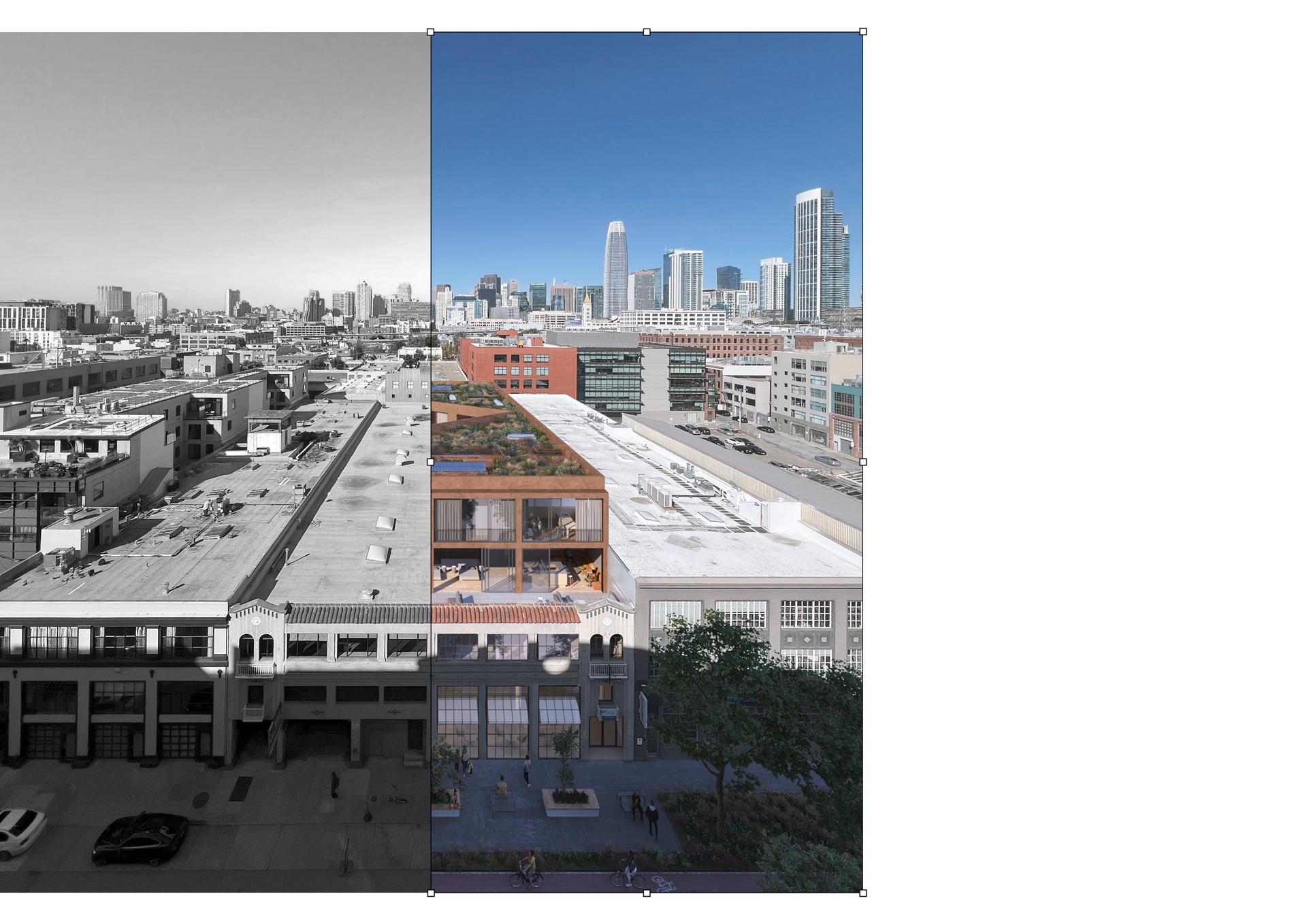
American cities must evolve or fail. So argue architects Paolo Brescia, Tommaso Principi, and Brett Terpeluk in Revitalizing Downtown San Francisco through Architecture, the new publication set for release on 30th September 2025. The document brings together the voices of international experts across architecture, urban design, engineering, mobility planning, landscape design, and real estate to offer an informed, holistic, and multi-disciplinary approach to completely rethinking the urban forms and functions. The publication led by Milan-based architects OBR Open Building Research and co-authored by Studio Terpeluk from San Francisco, sees contributions from globally renowned engineering firm Arup, Belgian sustainability specialists Sureal, Milan and NYC based transportation consultant Systematica, and the world’s largest commercial real estate firm CBRE and Openfabric, the Rotterdam-Milan-Genova based practice of landscape architecture and urban design.
The publication opens with a manifesto asserting that cities have always been multifunctional spaces, integrating homes, workplaces, production sites, and services. The industrial revolution disrupted this balance, giving rise to business districts defined by strict functional separation. By the late 20th century, this model faced increasing criticism from advocates of sustainable urbanism, who championed mixed-use development to invigorate cities, reduce car dependency, and minimize commuting distances.
The Covid pandemic accelerated the critique of the monofunctional model. Mass remote-working emptied office buildings, exposing the overreliance of business districts on daily office commuters. Covid didn’t cause the model’s failure; it revealed its vulnerabilities and hastened its decline, prompting a collective reassessment of work-life balance and our connection to nature. In the wake of the pandemic, predictions of the office’s demise and a permanent shift to remote work sparked discussions about repurposing billions of square meters of vacant space to address the housing crisis. Yet, progress has been slow. Factors such as structural constraints, high renovation costs, and an apparent return to normalcy have stalled many conversion initiatives.
This research raises a fundamental question: How can we reimagine the city through a change of paradigm?
For the multidisciplinary team behind Revitalizing Downtown San Francisco, the answer is clear: offices will not disappear. Instead, a hybrid model – combining remote and in-person work – is emerging as the optimum compromise for employers and employees alike. To thrive, office spaces must be reimagined to prioritize user well-being, while their neighbourhoods must integrate residential and mixed-use functions to become vibrant and attractive.
As for obsolete office buildings, should they be demolished to make way for new housing? This research strongly advocates for transformation over demolition wherever geometry allows. Beyond economic savings, adaptive reuse offers ecological, social, and political benefits: resource conservation, affordable urban housing, and enhanced city vitality.
Despite their decline, business districts retain a crucial asset: density. This proximity reduces travel distances, concentrates services and experiences, curtails urban sprawl, and preserves farmland and natural areas. High density also provides a unique opportunity to rethink urban mobility and reclaim street space for public use and nature, fostering new, more resilient ecosystems.
Adapting office buildings – often poorly suited to residential use – presents a unique opportunity to redefine architectural norms and explore innovative solutions. The mission is clear: breathe life into sterile districts, creating spaces that thrive around the clock.
Revitalizing Downtown San Francisco urges us to reimagine cities to ensure their survival and evolution. It’s a call to seize this rare chance to create dynamic, adaptable urban environments that rise to tomorrow’s challenges. Let’s take this opportunity to envision our cities’ sustainable future.