

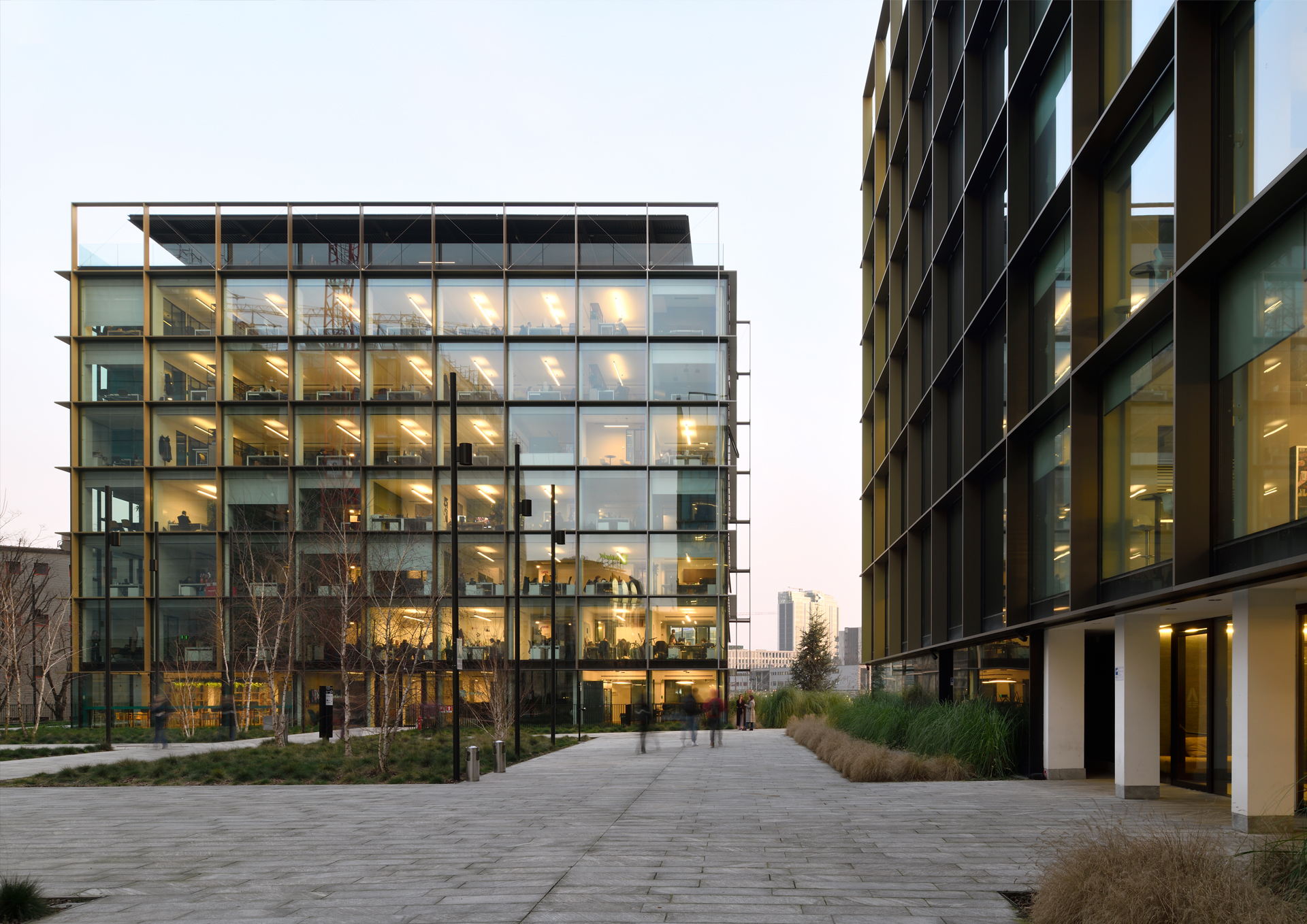
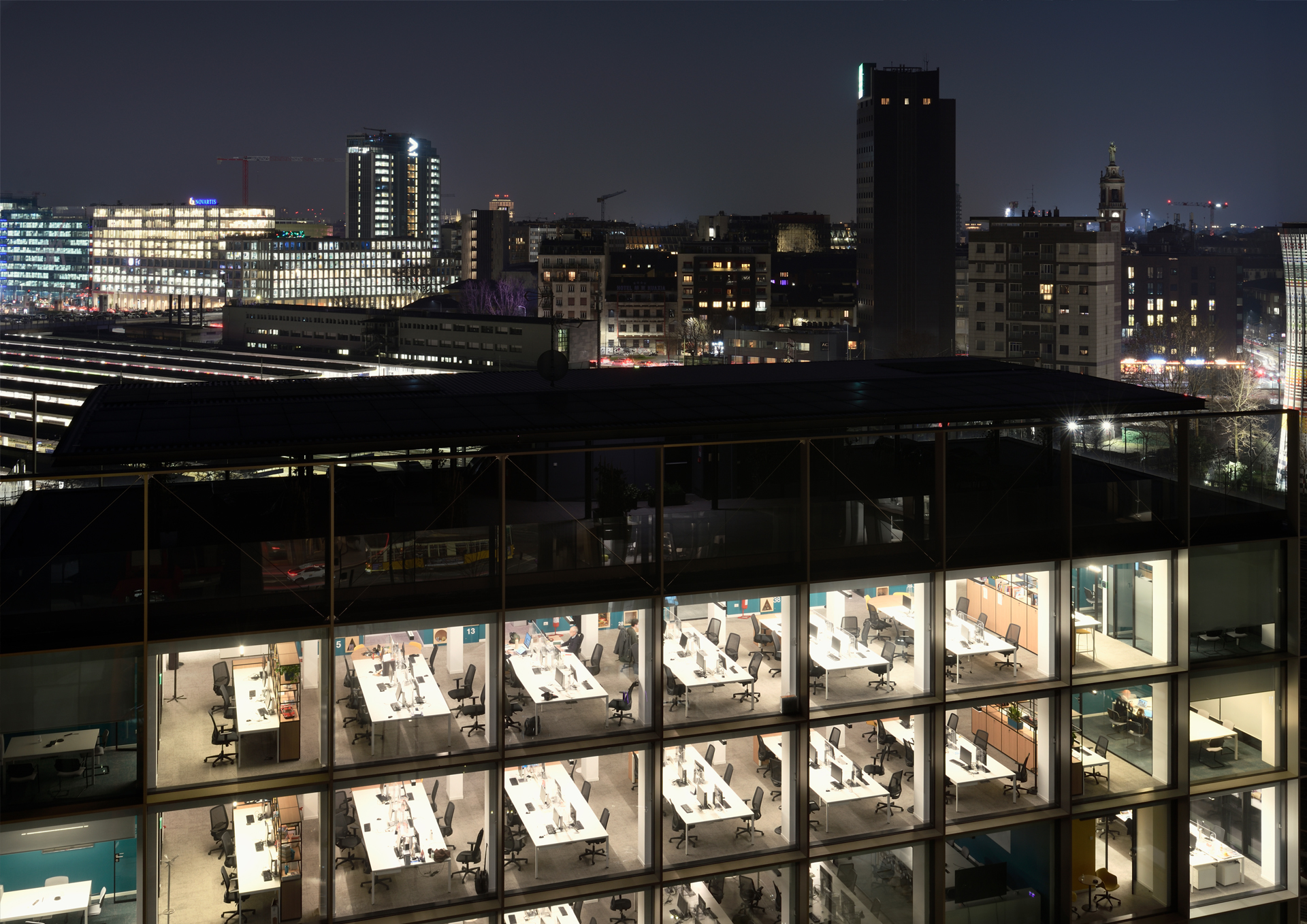
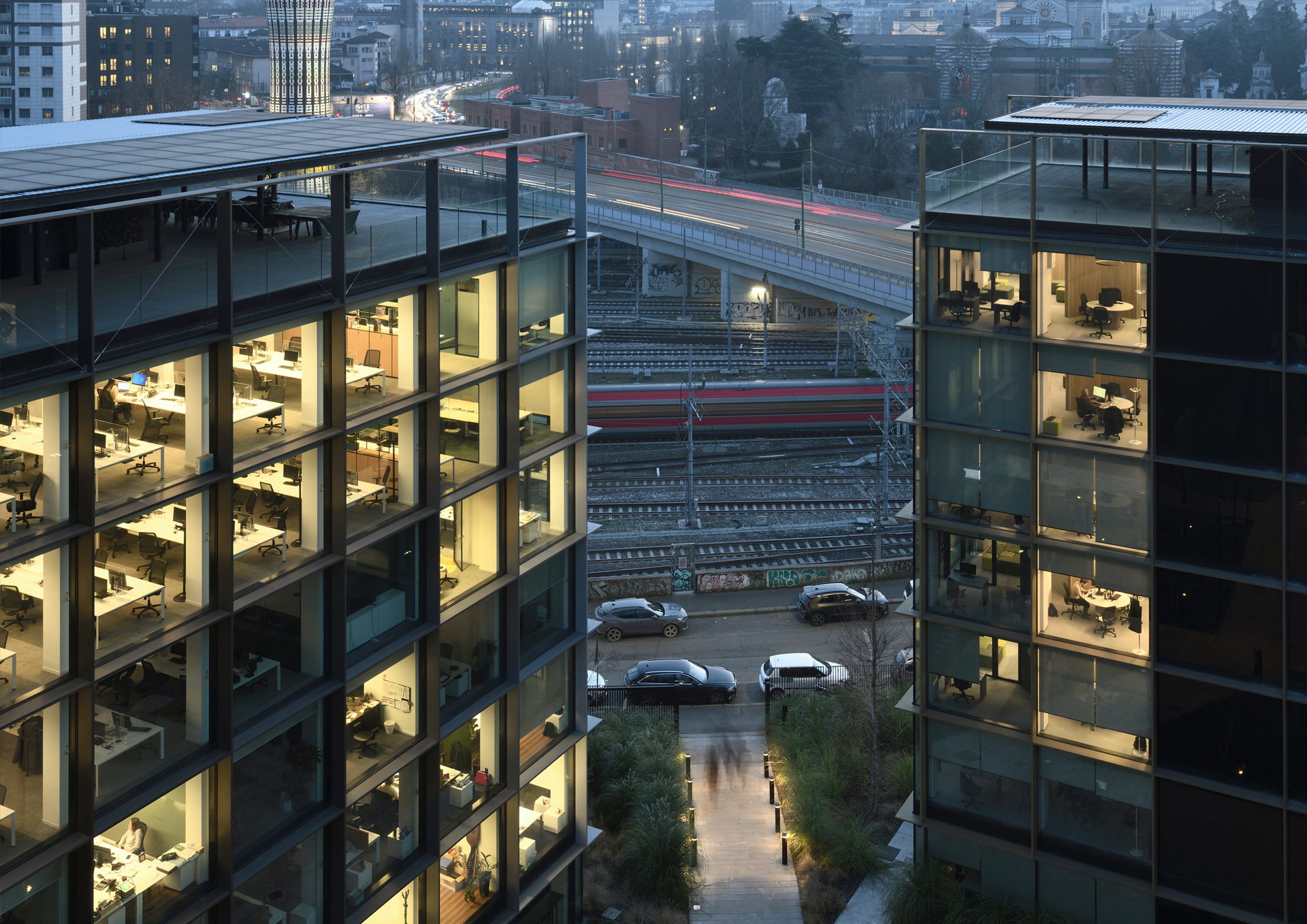
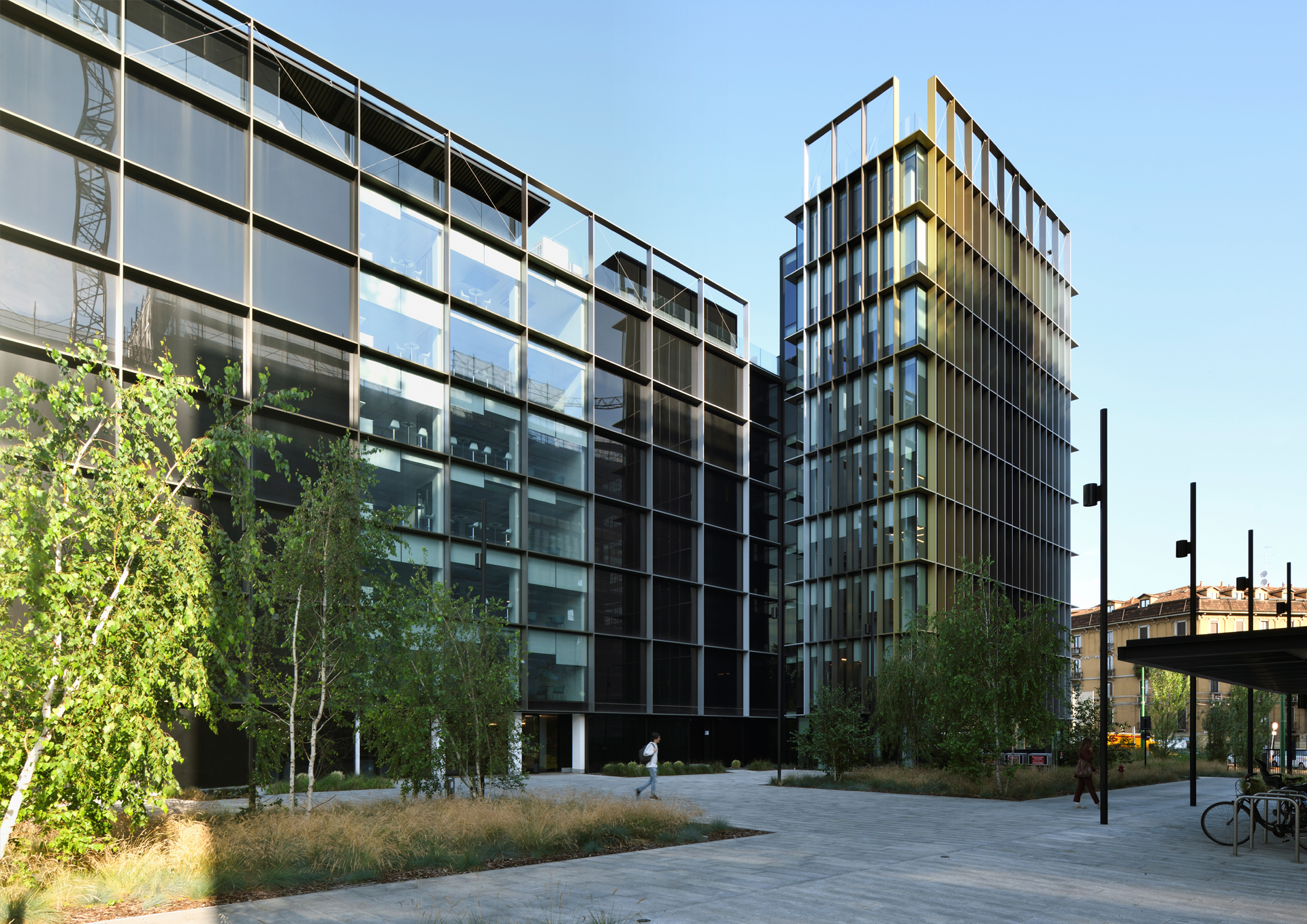
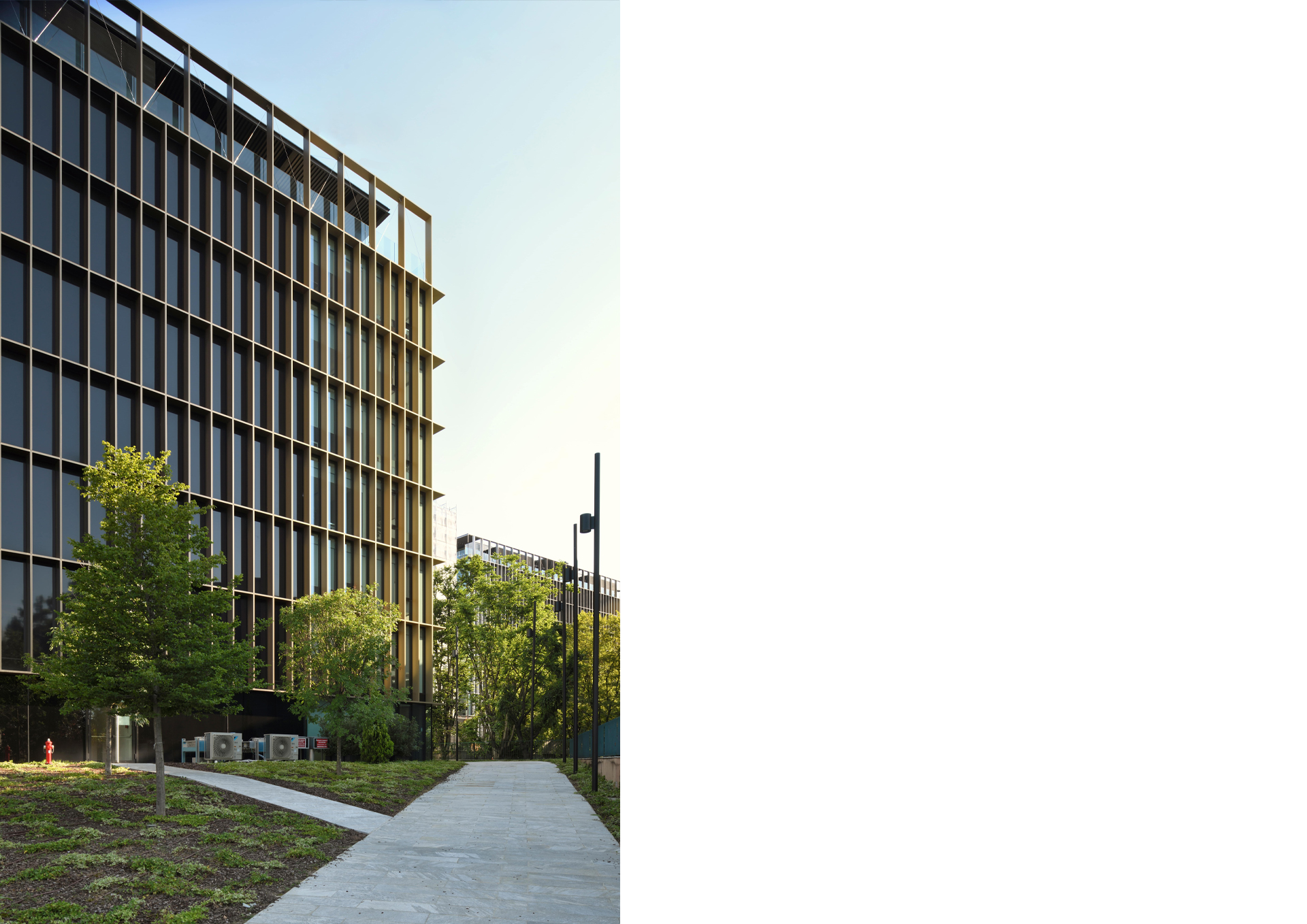
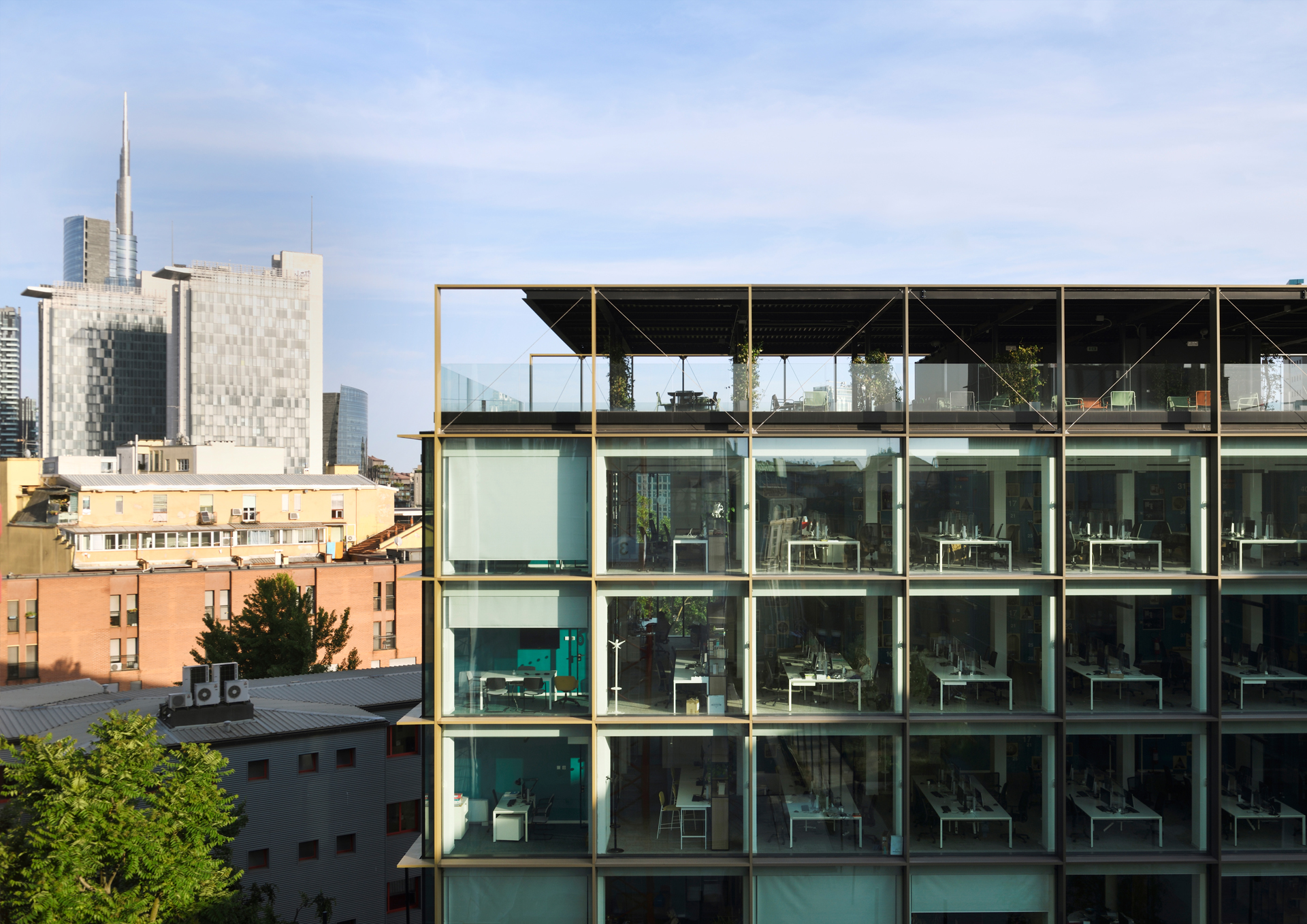
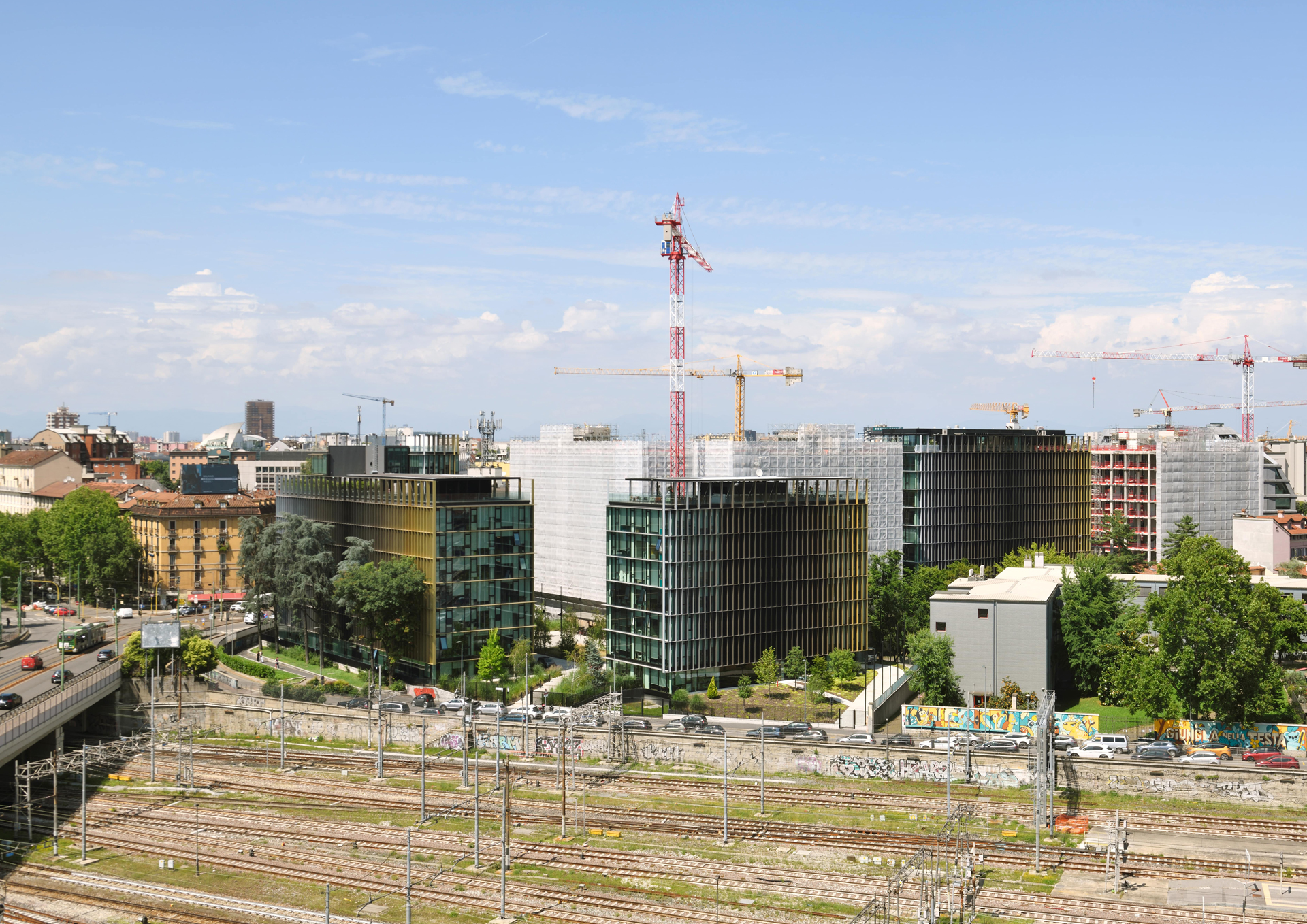
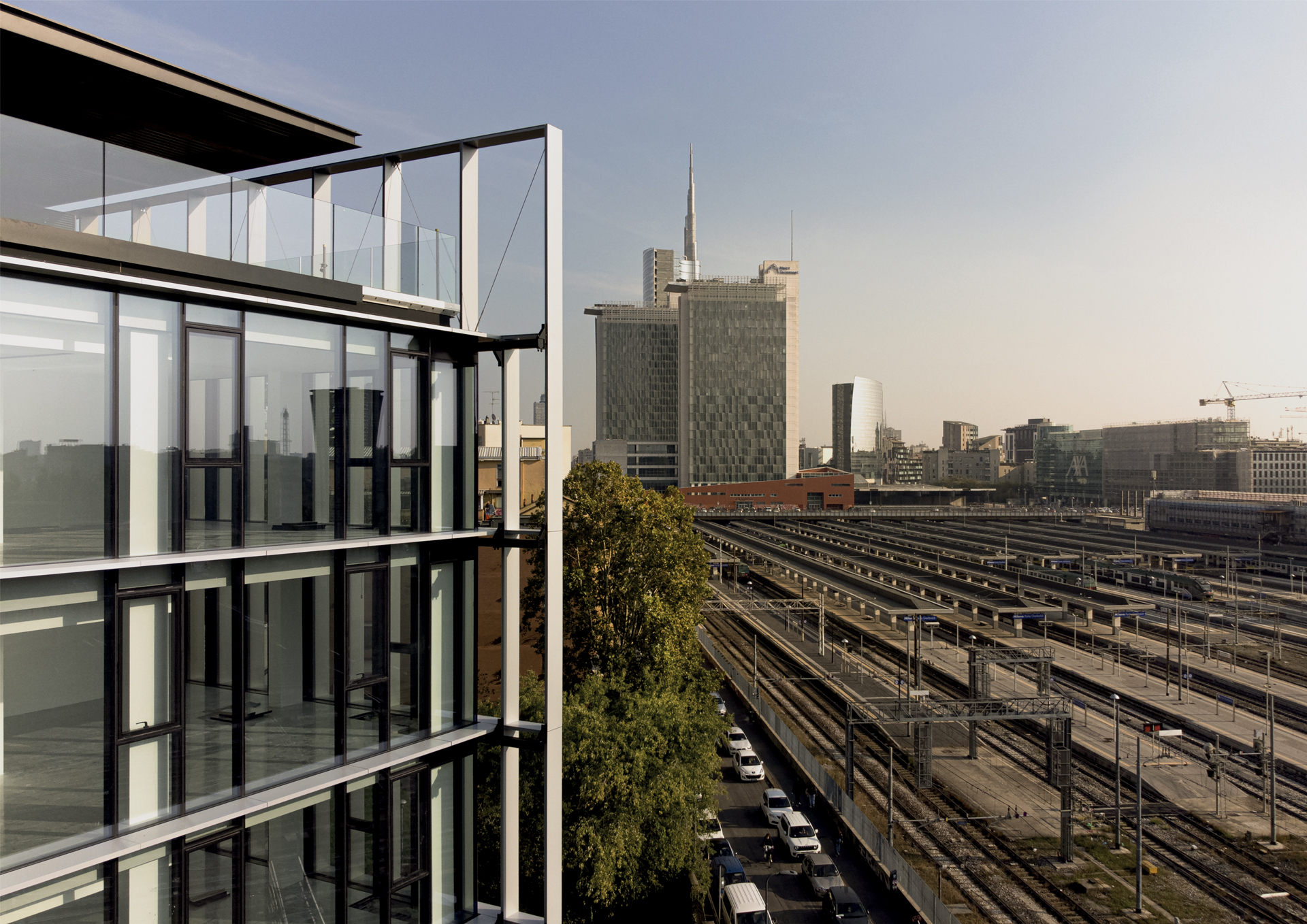
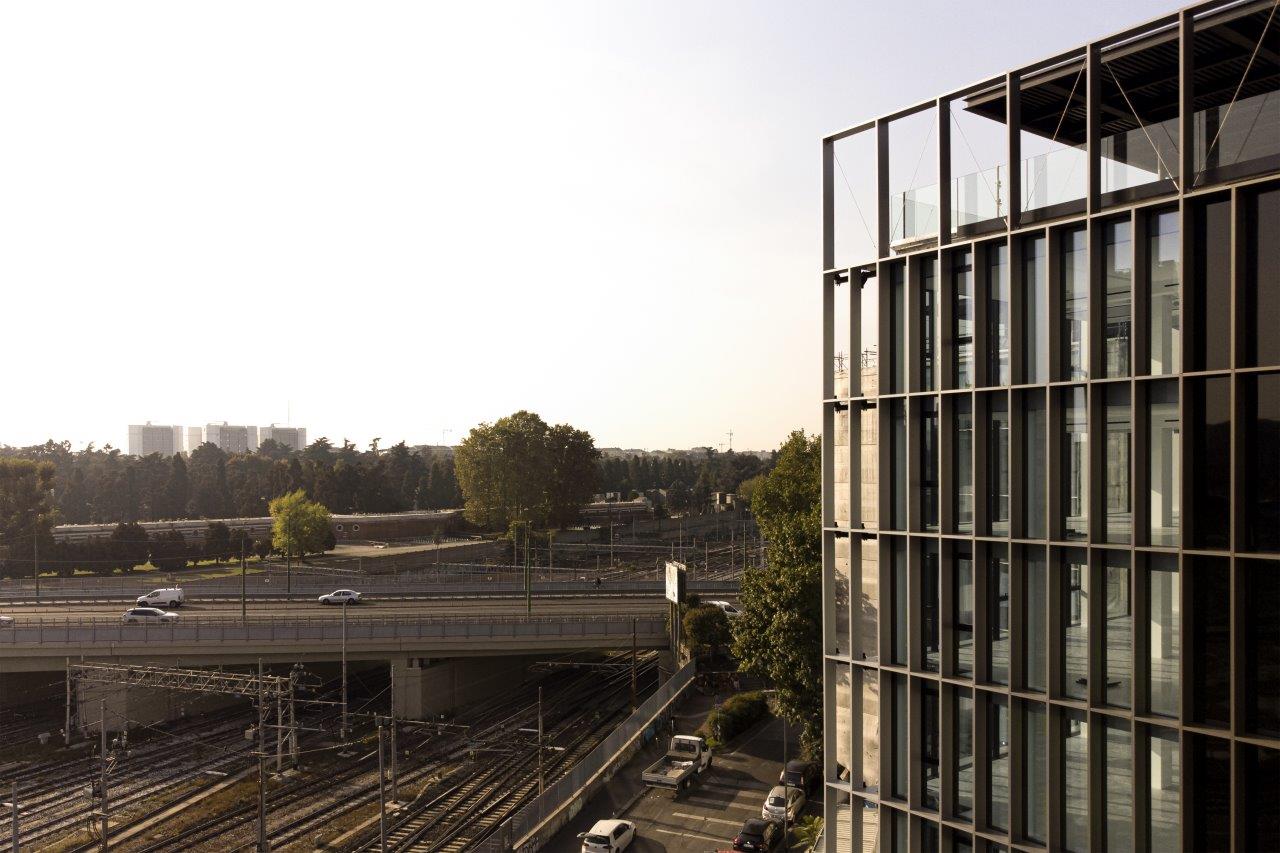
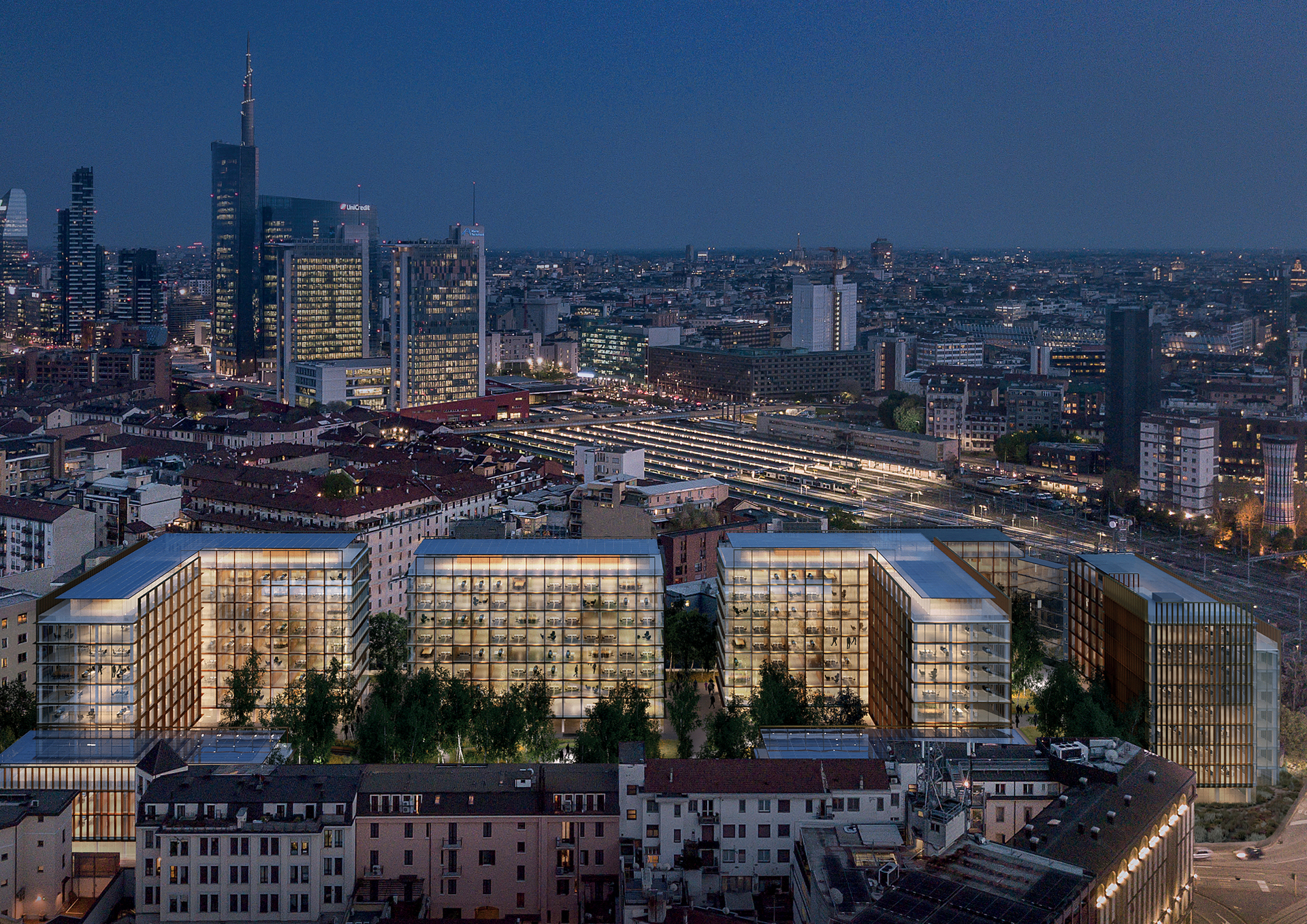
The Bassi Business Park complex is set in a very significant context in Milan, between the Porta Nuova district, the Porta Garibaldi high-speed train station, and the evolving Scalo Farini area.
The eight buildings that comprise it, dating to the 1970s, were in need of a reinterpretation in line with the fast-paced development of the area. Rather than demolishing, rebuilding, and thereby wasting ecological and economic resources, we decided to regenerate the built environment to enhance Milanese architectural heritage.
Recovering the original structures of the buildings, we established new spatial relationships between the existing buildings via punctual demolitions and grafts aimed at revitalizing the complex. Our project involved the aerial connection between some of the buildings and the creation of new paths and views, promoting the interconnection of the complex with its context and transforming what was previously a lateral side into a new urban prospect.
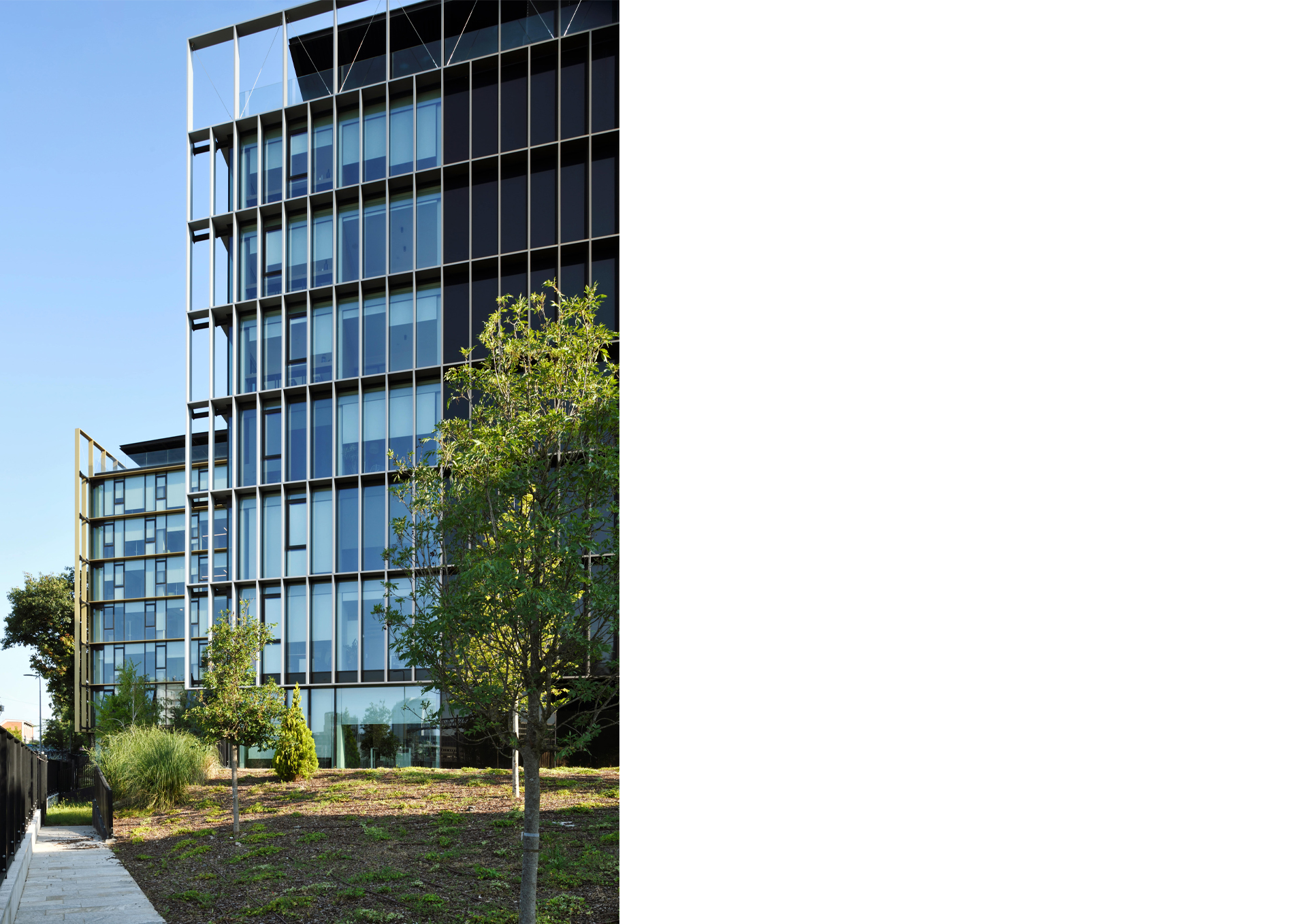
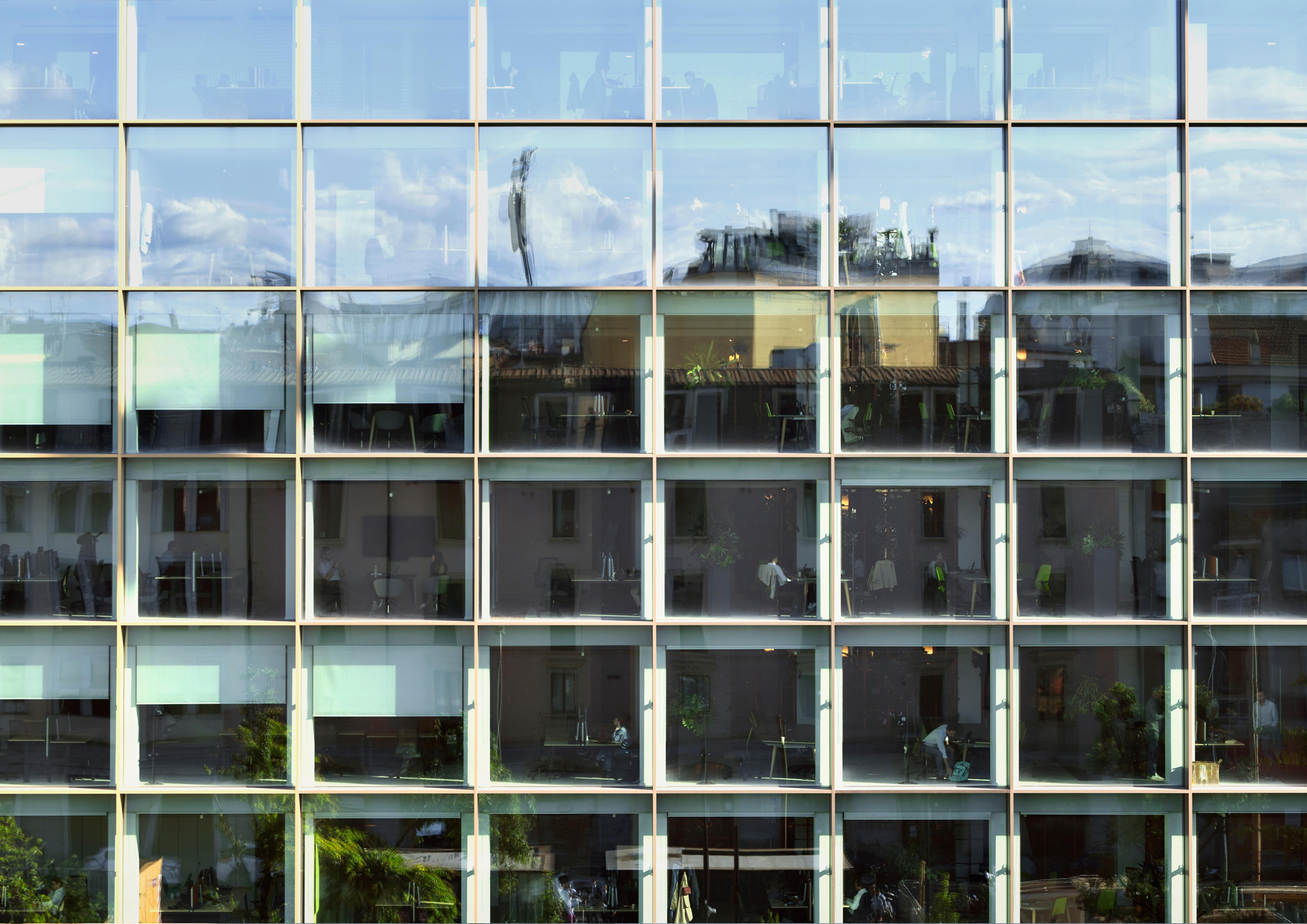
The outer shell lightens the volumetry of the buildings through a layered façade that allows the dematerialization of the volume behind it and the reflection of the surrounding context.
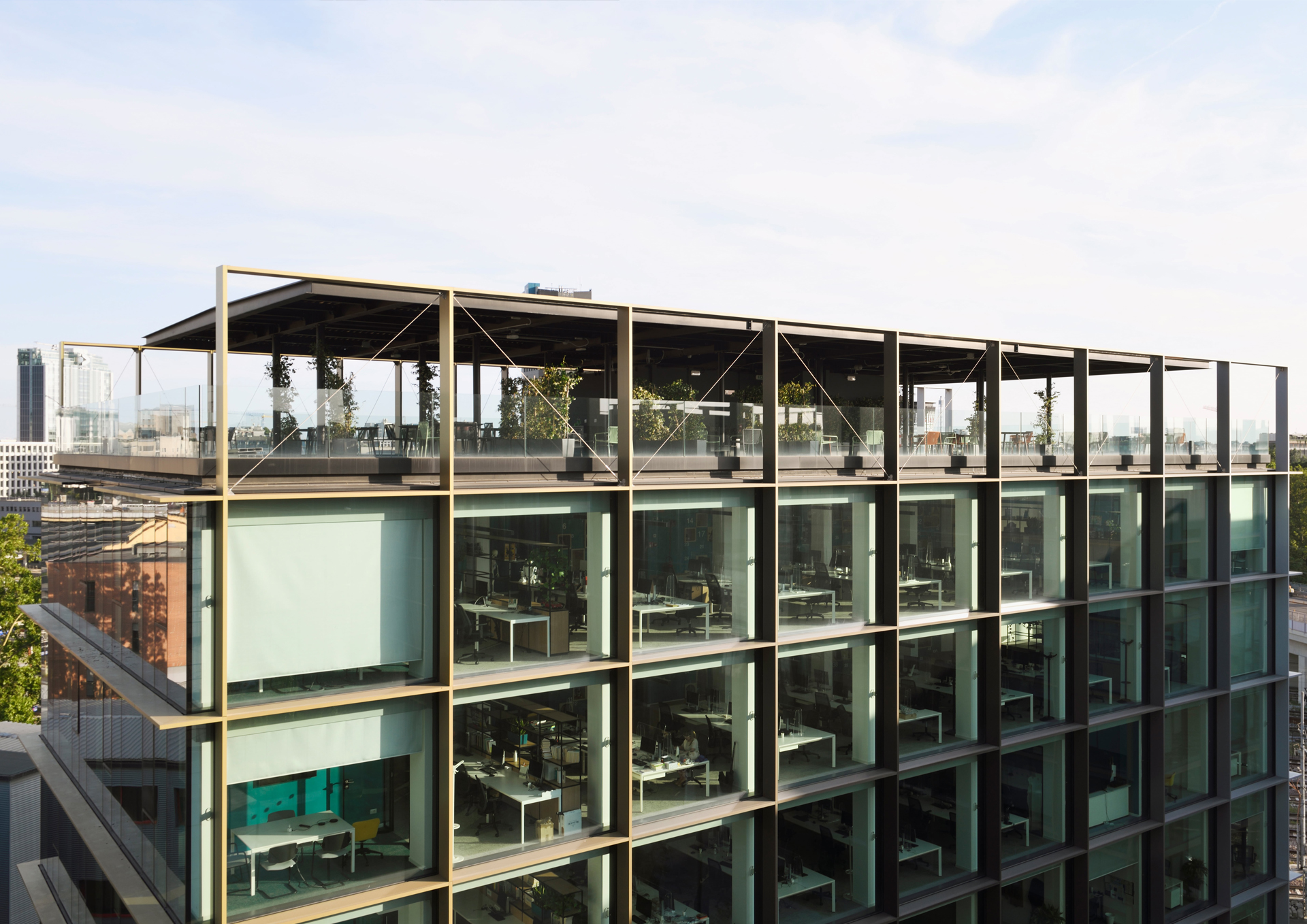
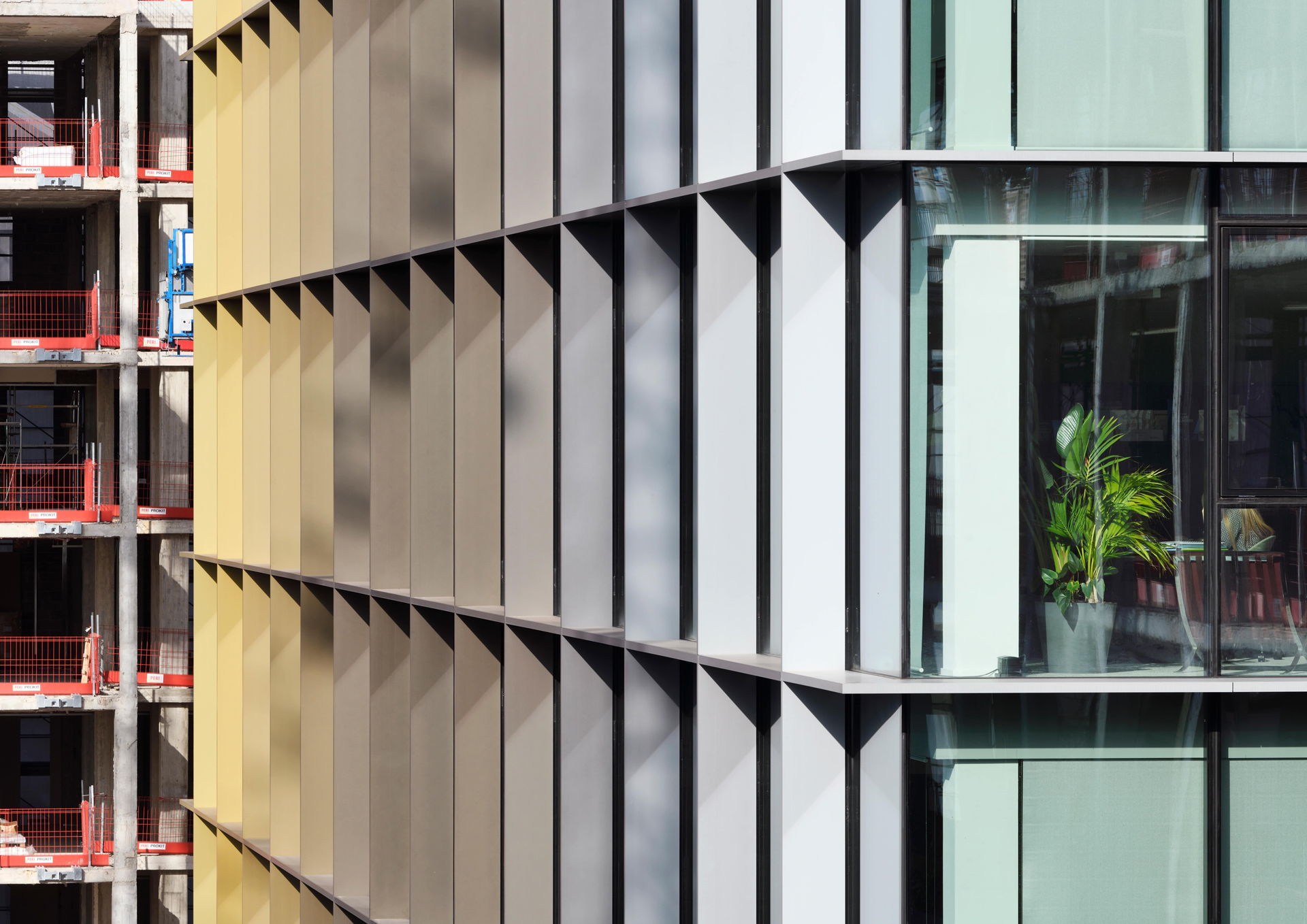
We envisioned an architecture that would be reflective by day and iridescent by night. The large glazed surfaces of the façades feature a system of brise-soleils with a warm-to-cool color range, creating a thermoregulating space that contributes to meeting the requirements of LEED Gold certification.
The large inner courtyard is designed as an “urban forest,” an outdoor space where one can enjoy staying and gathering in an urban and at the same time natural setting.
Indoor spaces are defined by transparency and flexibility, able to adapt to multiple work solutions: coworking, shared or individual communal spaces, easily rearrangeable layouts, and fluid transitions between indoors and outdoors, designed to facilitate social interaction and promote that mental and psychological exchange among people who are physically together. The workspaces are designed following a new concept of the office as the best place to meet, exchange experiences, learn from others, and shape one’s own identity. This design brings people together, helping to foster those casual, unpredictable, and meaningful relationships that remote working is unlikely to bring about.