

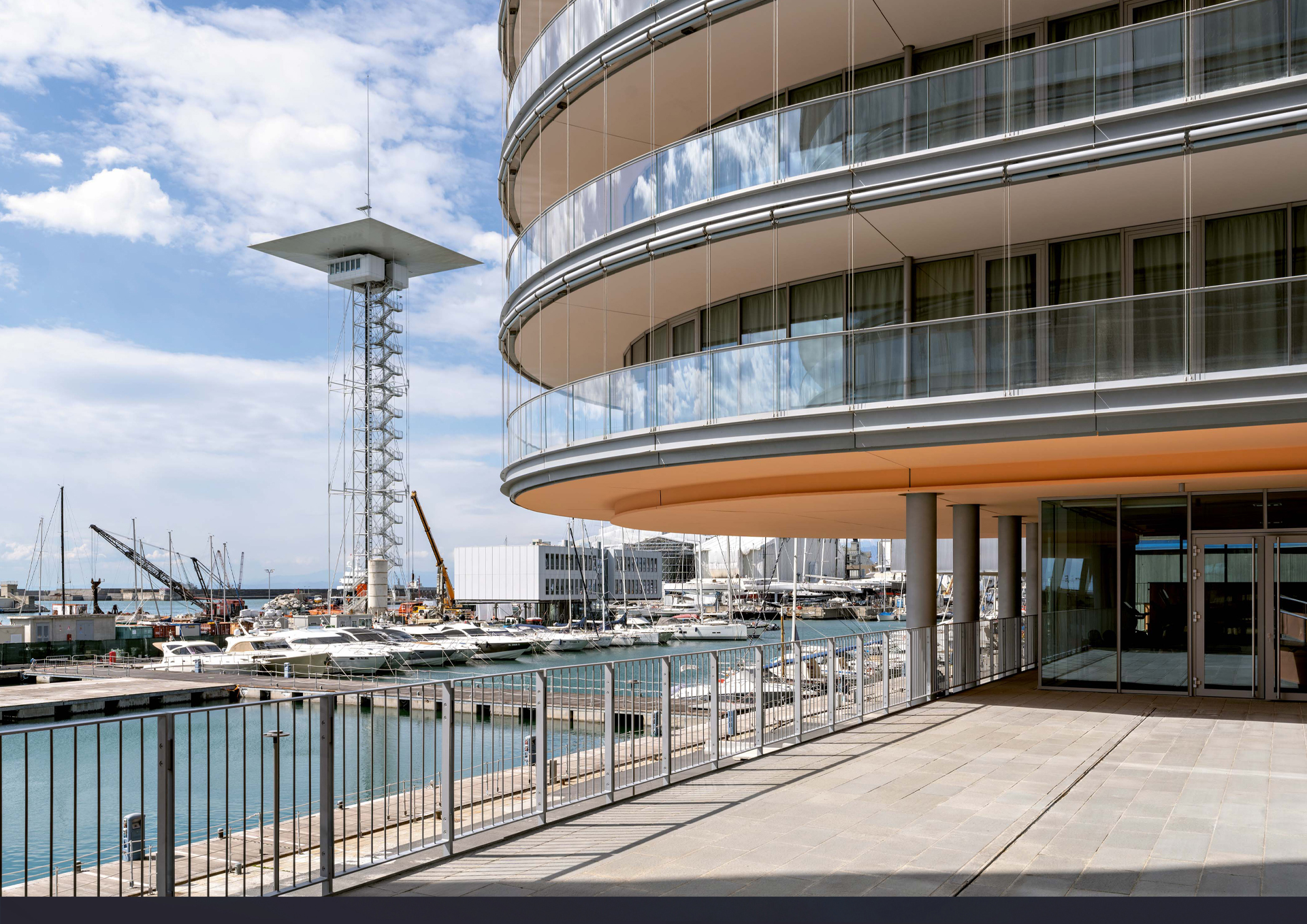

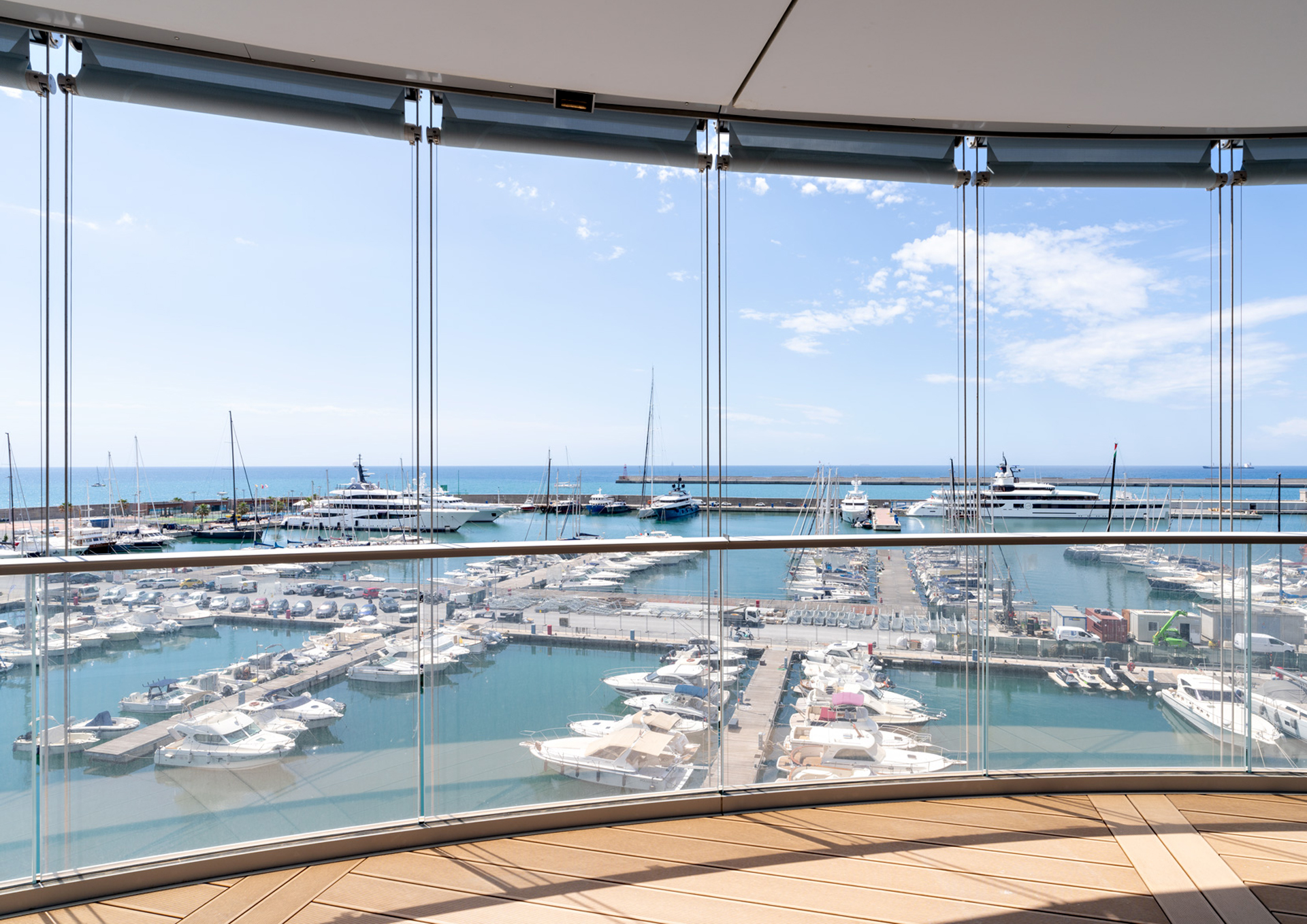
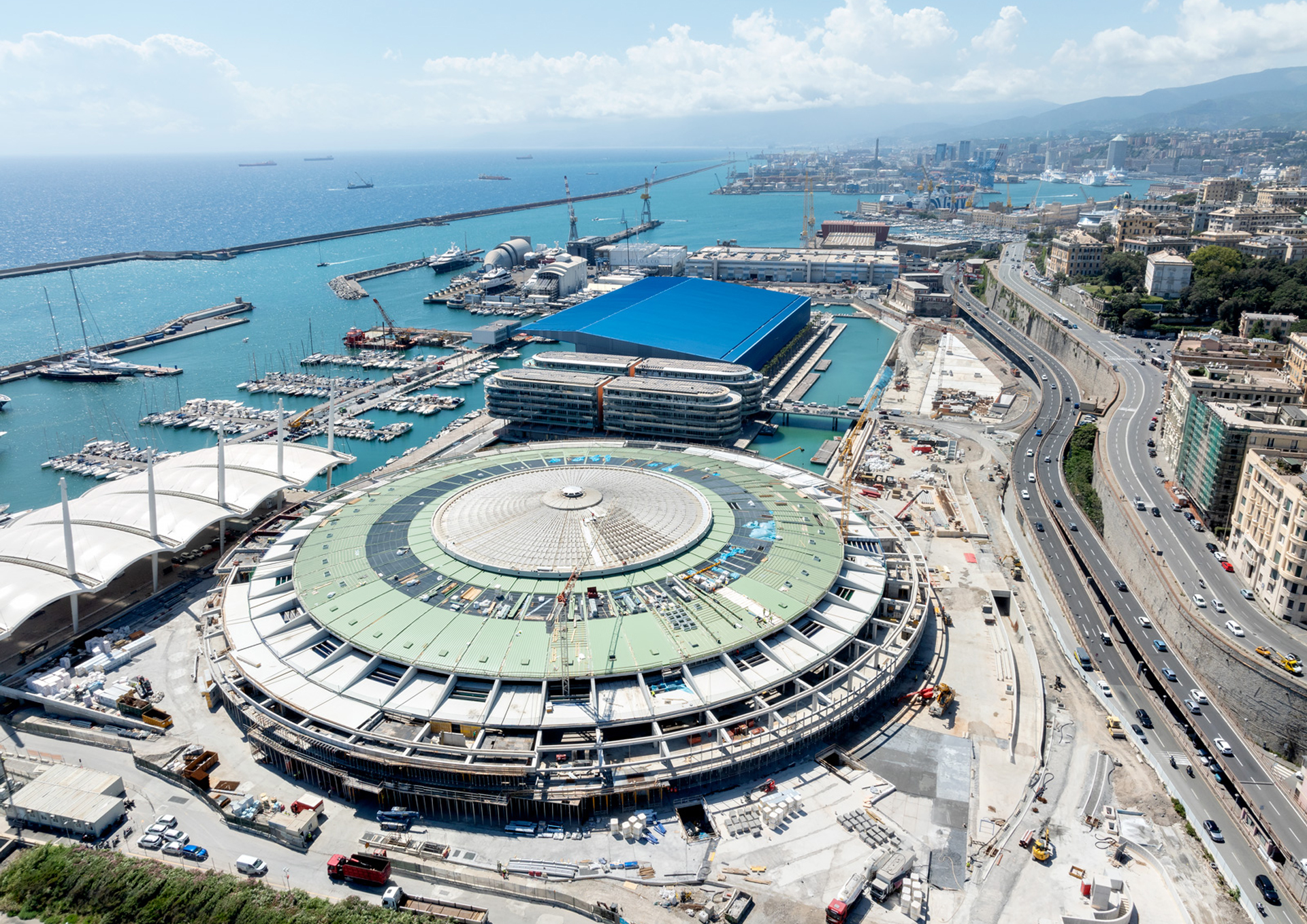
The project for Genoa’s former fair area was one of the longest and most complex experiences of our professional journey. The beginning of this story dates back to 2013, when a private operator asked us to develop a feasibility study to rethink the disused volumes of the Fair of Genoa at the port entrance. It was clear from the very beginning that we were working within one of the city’s most sensitive brownfield areas. For this reason, we felt it was our duty to share a common vision with Renzo Piano who, with the 1992 Colombiadi and the 2004 Affresco, had already addressed the theme of the city-port relationship from the perspective of the city, rather than the port.
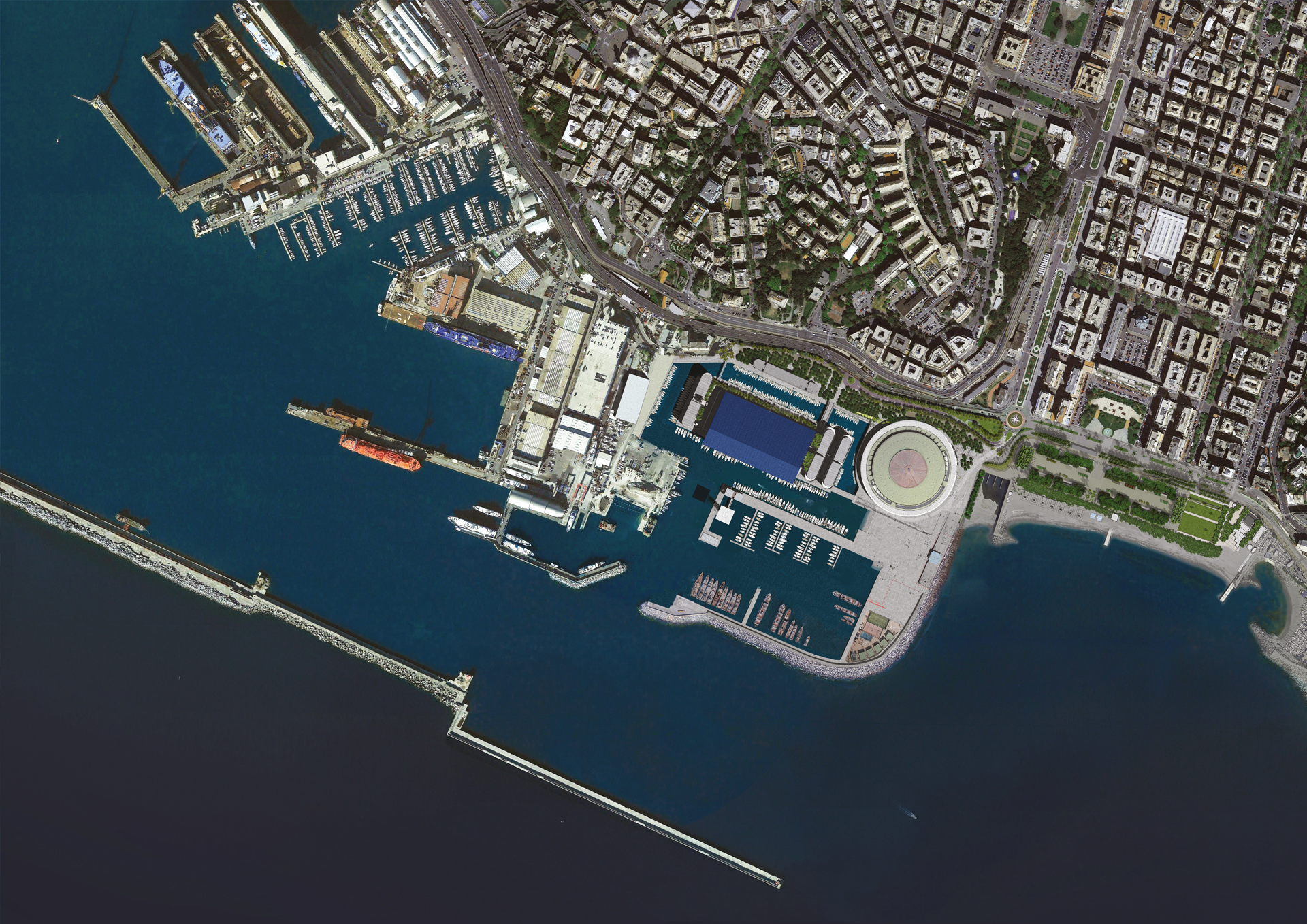
We decided to jointly elaborate a study to redevelop the areas behind the port in order to restore strong urban quality to Genoa’s seafront, where the postwar port expansion had weakened the city’s identity by removing—rather than transforming—what once was the back of the port, and turning it into a new urban front overlooking the sea.
Just as the regeneration of the Old Port of Genoa in 1992 allowed the historic city center to recover its visual and physical connection to the sea, our study aimed to resolve the divide between city and sea through the creation of a new canal between the Old Port and the Fair. Instead of occupying sea surface, we envisioned the opposite process: bringing water back where it once flowed around the old city walls, creating the “port-plant island.” Moreover, by working on the Fair’s brownfield area, we proposed halving the volume of the abandoned pavilions to create a new seafront for the city, animated by both public and private functions — a canal port with a large urban park, residential, office, hotel, and retail buildings, student dormitories, and the renovation of the sports arena.
Following the severe flooding in Genoa in 2014, Renzo Piano decided to donate his vision to the city as a free contribution to Genoa’s urban, port, industrial, and social future — the Blueprint.
In 2016, an idea competition was announced, which we entered with a team including Arup, Baukuh, D’Appolonia, HMO, Michel Desvigne, Openfabric, Mario Kaiser, Valter Scelsi, Oliviero Baccelli, Margherita Del Grosso, and Matteo Orlandi. Our proposal, in keeping with Renzo Piano’s Blueprint, started from the voids, focusing on the quality of open spaces along the seafront and on the classic Genoese large flat roofs offering unexpected views over the city — perspectives capable of reweaving the relationship between the city and the sea. The proposal also included Piazza del Mare, a new public square characterized by a large canopy providing shelter and creating a super-urban space at the water’s edge.
Following the competition, which did not select a winning project, the City of Genoa launched a public call to identify an operator capable of acquiring and redeveloping the decommissioned volumes in line with the Blueprint guidelines. In parallel, the City committed to realizing the public areas, including the canal port and the new urban connections.
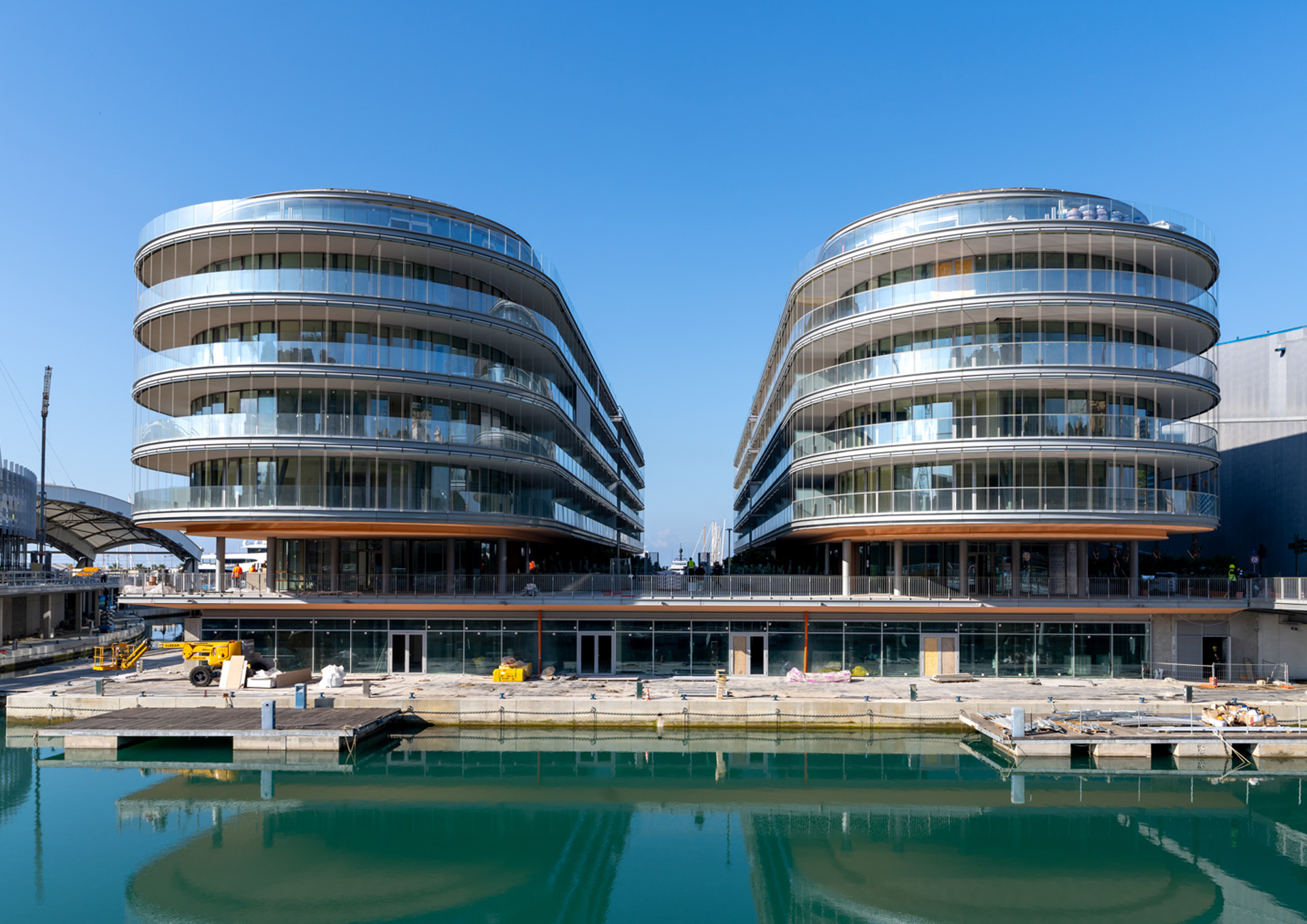
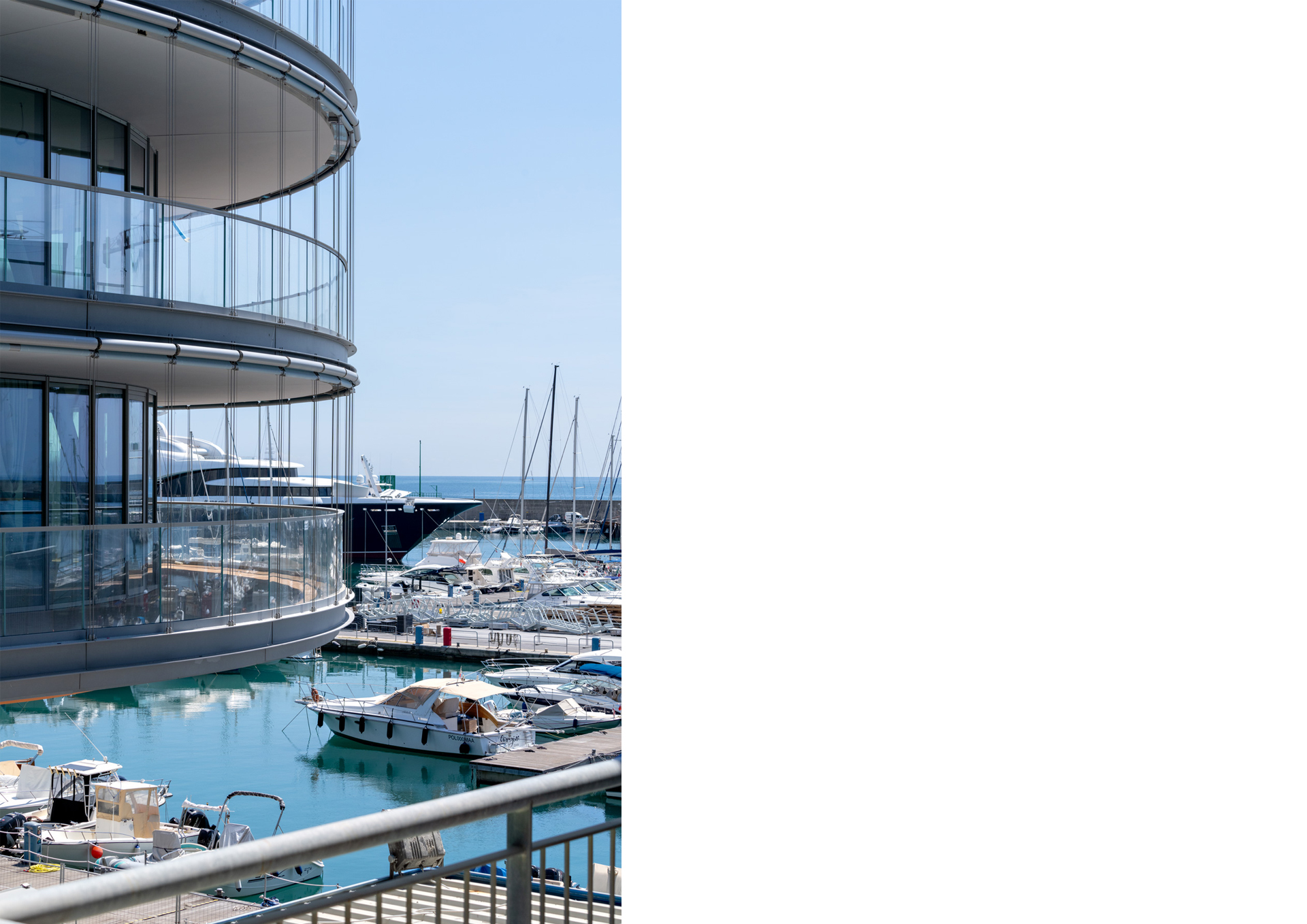
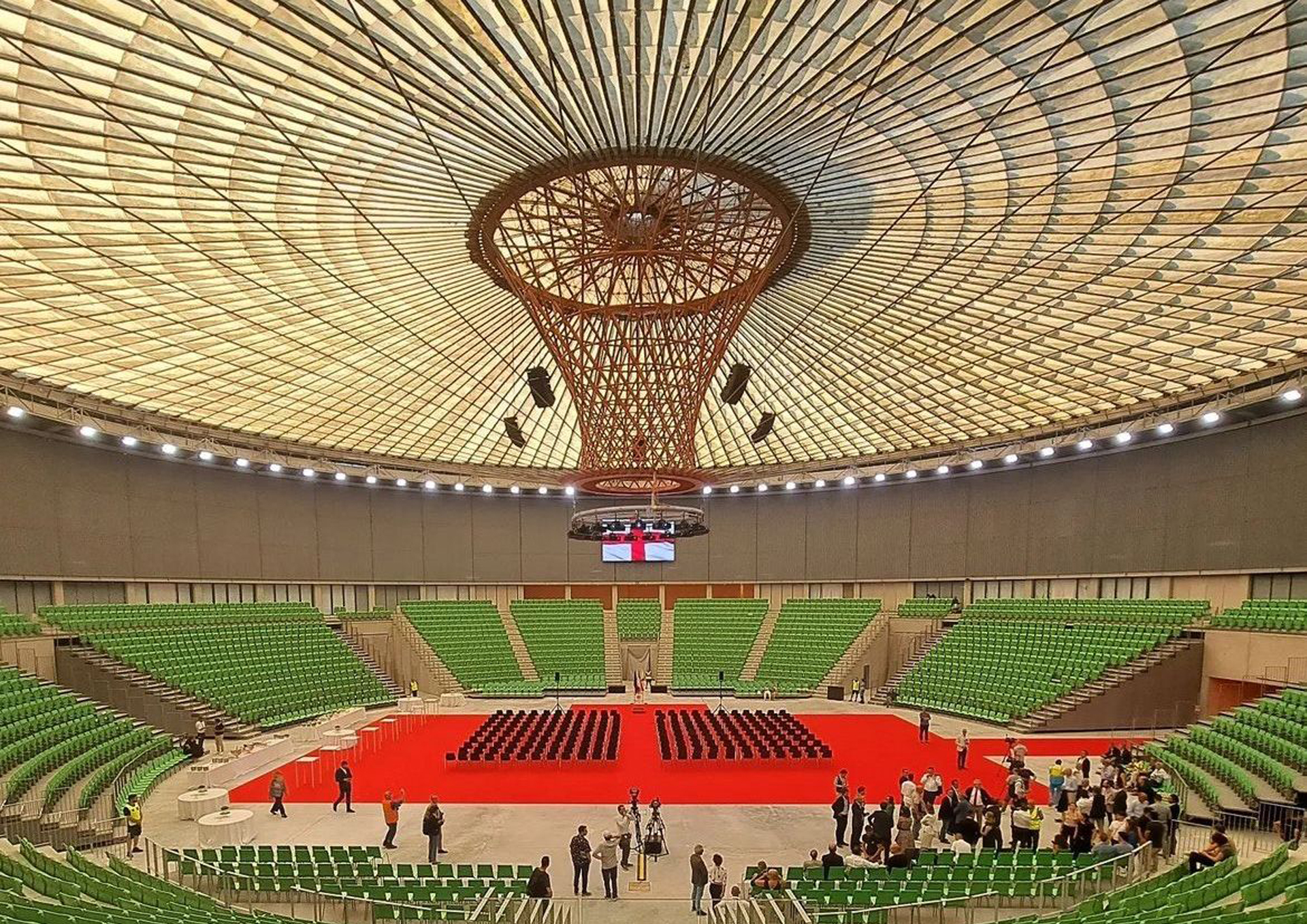
In 2017, Renzo Piano’s vision evolved into the Levante Waterfront. In 2020, OBR collaborated on the drafting of the urban plan on behalf of CDS Holding Group, the concessionaire of the private areas, and curated the regeneration of the Palasport Arena, the key interface between the city and the waterfront. In 2021, Renzo Piano invited OBR to design the residential lot, while Mayor Marco Bucci initiated the construction of the public areas, marking a new chapter in the long transformation of Genoa’s seafront.